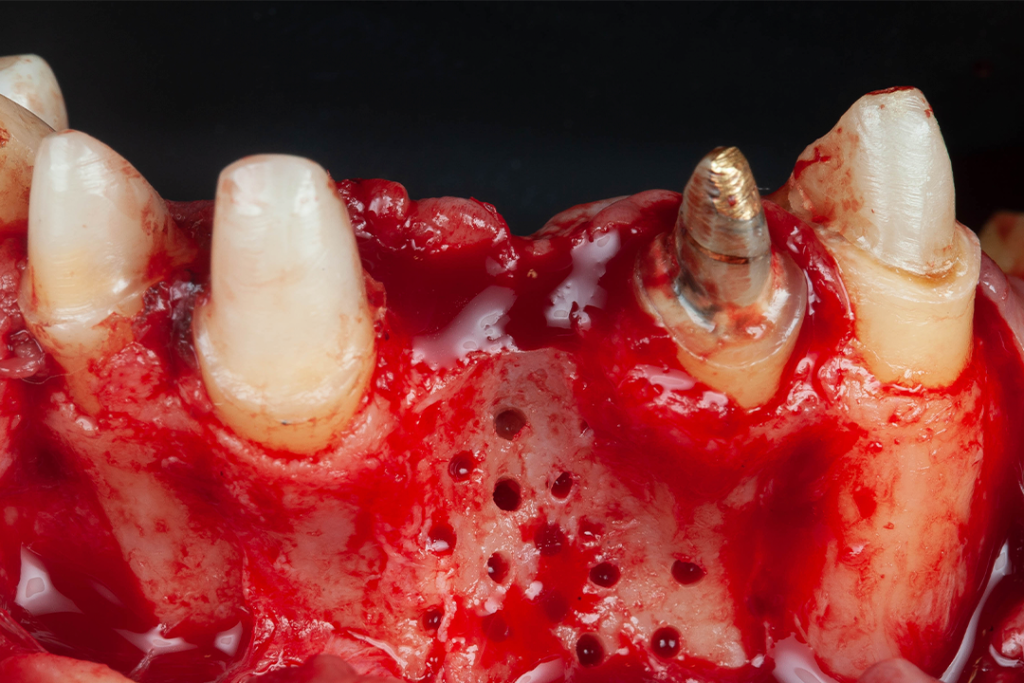
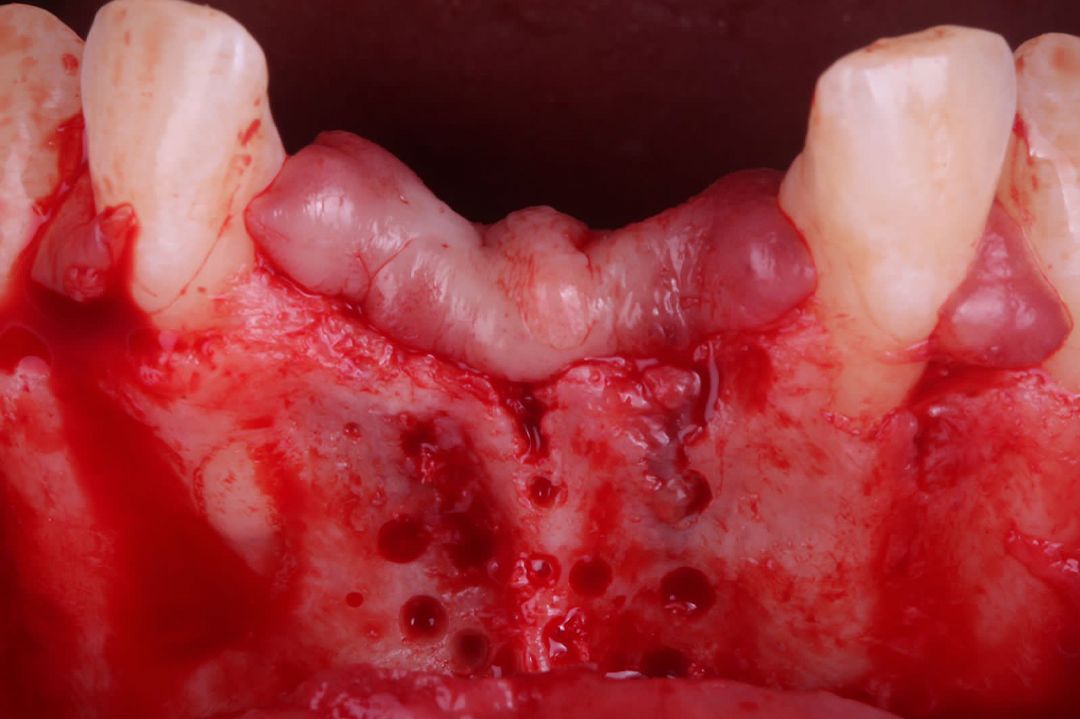
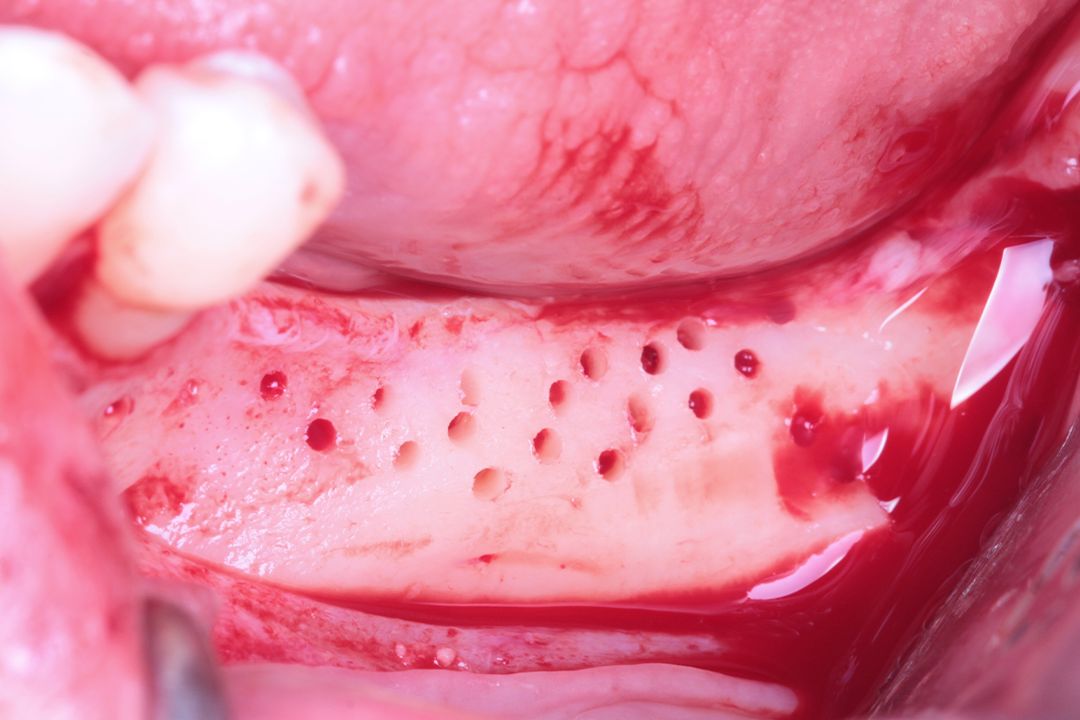
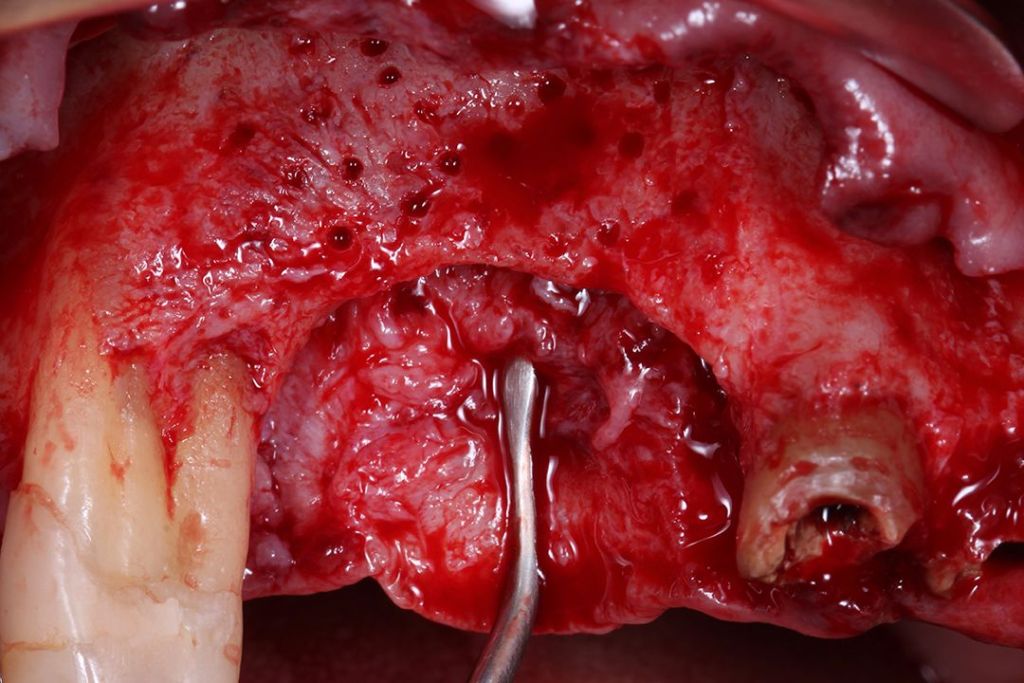
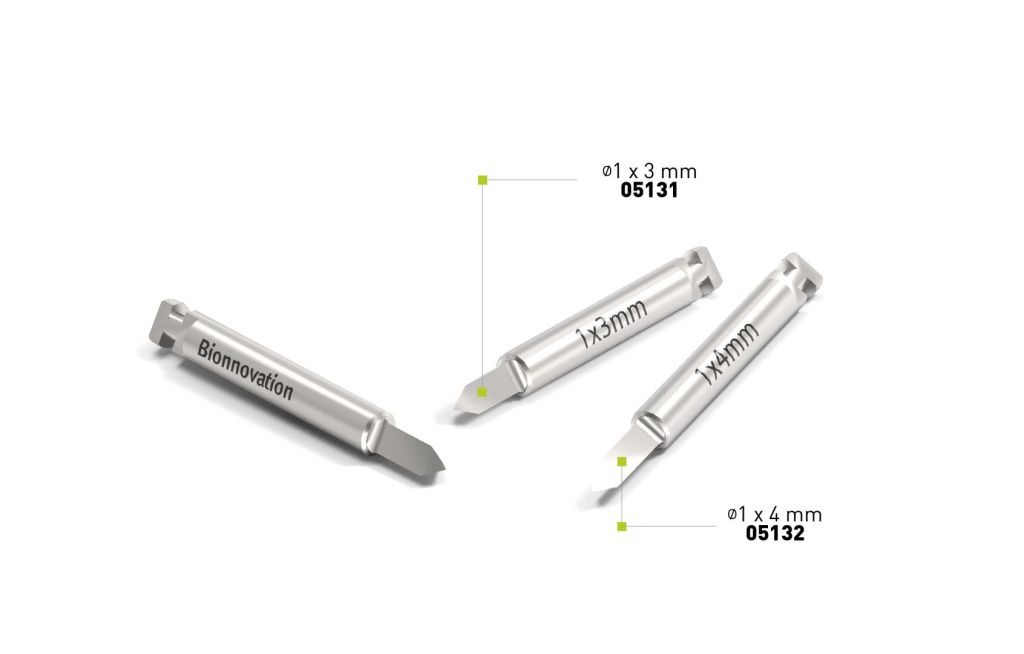
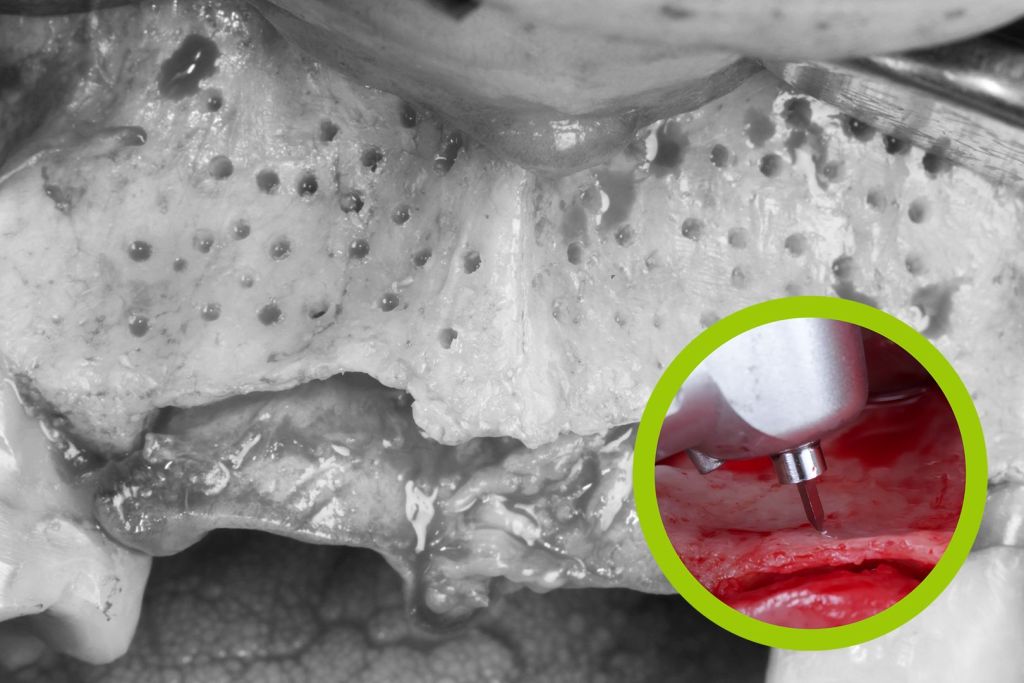
Drill bit for decortication from the receiving bed.
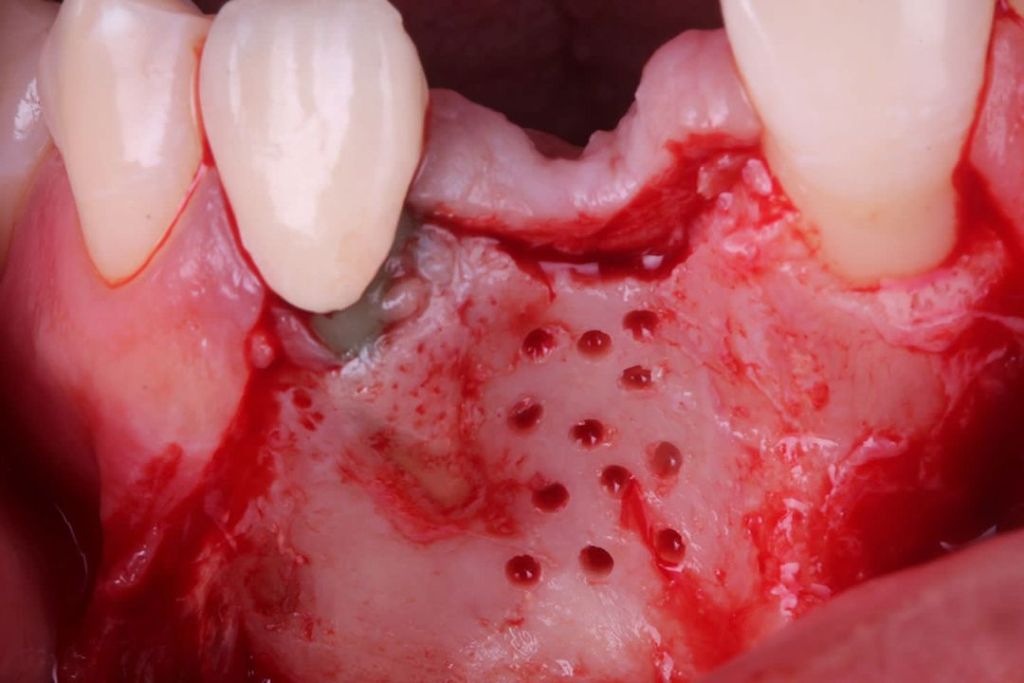
Preparation of the recipient bed with bone drilling.[decorticationIt accelerates the graft revascularization process, as well as maintaining graft volume because there are no areas of necrosis.
> Made in stainless steel Surgical I ASTM F899 440 > Diameter: 1.0 mm > Available depths: 3 and 4 mm > Fitting: Contra-angle > Rotation speed: 50-300 rpm > Durability: ~25 Procedures
According to Buser et al, 1996, the cortical bone In the recipient area, perforations must be made to allow contact between the medullary space of the host bone and the graft bone, as graft success depends on good blood supply and revascularization (MISCH & MISCH, 1995; VASCONCELOS AND CARVALHO, 2000). Perforations of the cortical bone in the recipient bed induce revascularization, resulting in an increased influx of osteogenic cells, improving the union of the graft with the recipient area (MISCH, 1996). These additional perforations are made to supply the vascularization from the displaced periosteum.
Thus, it is generally agreed in the literature that the recipient bed should be decorticated to ensure blood supply to the graft and prevent the formation of connective tissue between them.
Decortication.
Bone decortication is often performed as part of a guided bone regeneration (GBR) procedure. The biological rationale for bone decortication is to allow progenitor cells easy access to a GBR-treated site and to facilitate immediate angiogenesis. It can also improve the physical connection between a bone graft and a recipient site..